
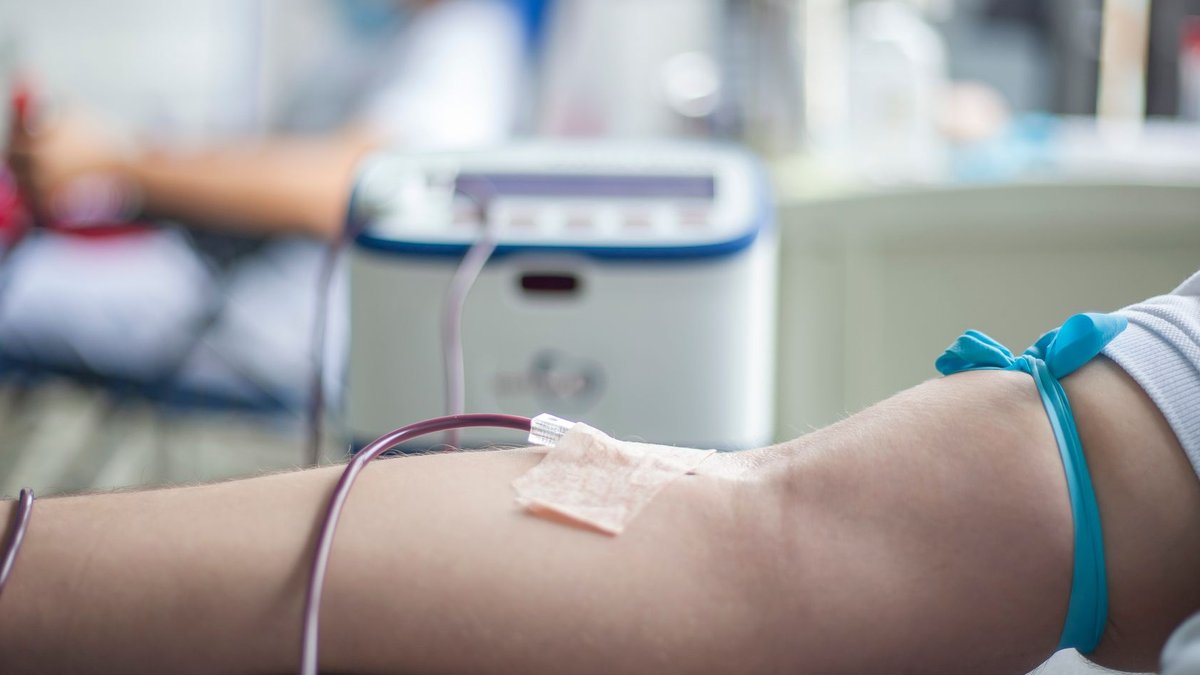
The blood plasma industry generates roughly $24 billion annually in the United States and accounts for about 2.69 percent of the country’s global exports, yet it operates largely in the shadows. Investigative journalist Kathleen McLaughlin, in her book Blood Money, examines how this massive trade has recruited tens of millions of people who sell their plasma for about $20 to $50 per donation. Most of these donors come from America’s “working poor,” a growing class of people who are employed but still struggle to make ends meet.
Plasma is a relatively abundant commodity that proves extraordinarily profitable within the biomedical world due to the ease of extraction, transport, and sale. An estimated 50 million donations occur in the U.S. each year. About 14 percent of donors give more than 50 times, and even with a medical limit of 104 donations annually, regular donors can make an extra $200 to $300 each month. For many in this divided economy, this supplemental income is a price they are willing to pay despite largely unspoken health risks.
Related: Blood Plasma Industry Faces Shadowy Trade Accusations
Hidden Costs and Legal Loopholes
Although the blood business is a legal enterprise, McLaughlin documents practices that veer into criminality. The industry has inspired a proliferation of exploitative behavior, including financial exploitation of COVID antibodies and the promotion of non-FDA approved anti-aging measures. Shady recruitment practices, sloppy hygiene measures, and a reluctance to disclose data on long-term health impacts all contribute to a highly criminal operation. The outlet reports that the industry has turned a blind eye to the safety concerns inherent in such high-volume extraction [1].
The regulatory environment allows these abuses to persist. The Protein Therapeutics Association notes that while the maximum number of donations is capped, the system encourages frequent participation. The abuses are so disparate and hard to trace that reforming the system seems nearly impossible. The problem is not attributed to a single profit-driven individual or corporation, but rather the systemic failure of America’s social safety nets.
McLaughlin notes that the industry relies on a specific demographic: people without substantial savings, well-off parents to help with rent, or high-paying jobs. The medication she takes is built on the backs of this quiet, hidden economic desperation. While the trade is technically legal, the reality is a dystopian economic system with vampiric tendencies that fuels itself off the bodies of low-waged workers. The investigative work exposes the uncomfortable truth that the industry’s profit margins are sustained by the most vulnerable members of the workforce.
Related: Stagecoach bandit left poems at crime scene
Regular donors can make an extra $200 to $300 each month. For many in this divided economy, this supplemental income is a price they are willing to pay despite largely unspoken health risks. [2]


Leave a Reply