
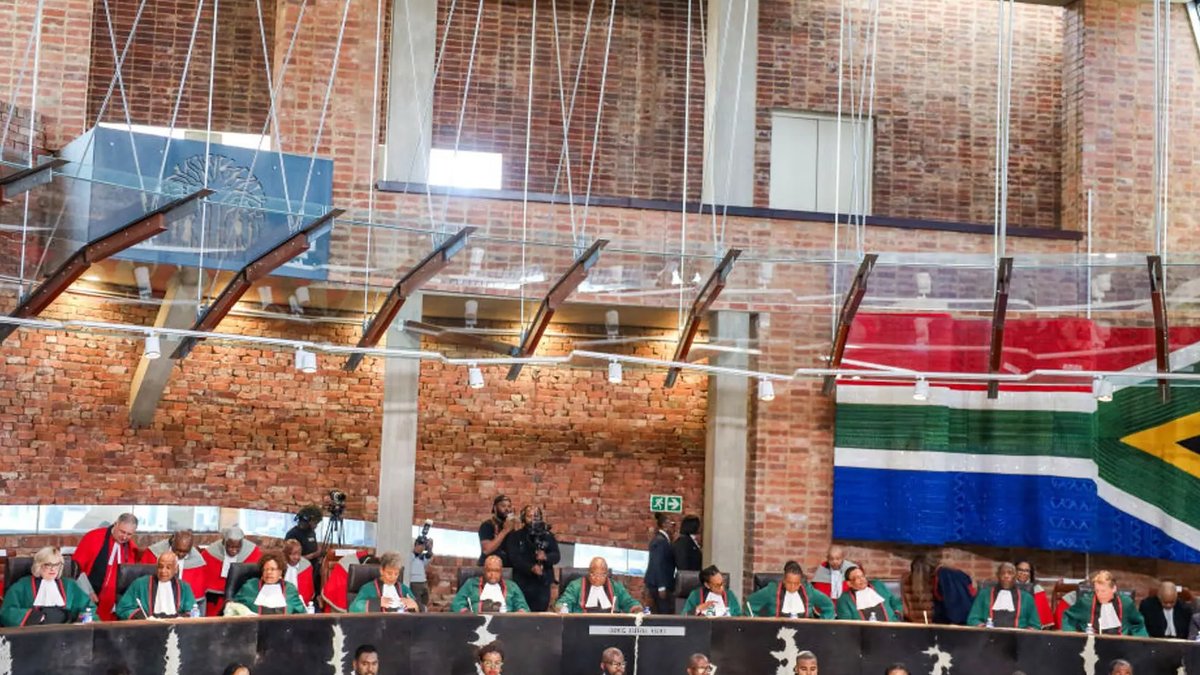
The Constitutional Court of South Africa began operating in 1994 and held its first session in February 1995. It functions as both a court of original jurisdiction and an appellate body, making it the highest court in South Africa for constitutional matters.
Authority and impact on national law
Section 167 of South Africa’s Constitution grants the court exclusive power to decide constitutional issues. It may also hear other cases if it grants leave to appeal, provided the matter involves “an arguable point of law of general public importance.”
The court has repeatedly overturned acts of Parliament. In 1999, it struck down the Sexual Offences Act for criminalizing homosexual conduct. More recently, parts of the National Health Act were invalidated due to restrictions on health professionals. In 2011, legislation creating anti-corruption bodies was ruled unconstitutional because it failed to ensure independence.
These rulings demonstrate the court’s role in enforcing constitutional limits on government authority.
Selection process and decision-making
The court includes 11 justices, led by a chief justice and deputy chief justice. Judges are chosen through a public process overseen by the Judicial Service Commission (JSC), a 23-member body with representatives from government, legal professions, and civil society. The JSC submits a shortlist of nominees—three more than the number of vacancies—to the president, who makes final appointments after consulting the chief justice and political party leaders.
Justices serve non-renewable 12-year terms or until they reach the mandatory retirement age of 70. Cases are decided by a simple majority, with the chief justice assigning the opinion writer after initial deliberations. The court maintains a strong tradition of concurrences and dissents, though separate opinions have become less frequent in recent years.
The structure differs from the U.S. system, where justices often serve for life and appointments carry clear political overtones. South Africa’s process emphasizes adherence to constitutional values.
Changing composition and public perception
The Constitutional Court’s makeup has changed significantly since its founding. In 1994, nearly all of South Africa’s 200 judges were white men. Today, the judiciary is majority Black, though still mostly male. This shift aligns with the Constitution’s requirement for the judiciary to reflect the country’s demographics and values.
Related: Man told Trump to find out on death threat
Unlike U.S. justices, who are often chosen for ideological alignment, South African judges are selected with an emphasis on representation and commitment to constitutional principles. The result is a court generally viewed as non-partisan. Most South Africans cannot name the justices or identify their political leanings, unlike the high-profile status of U.S. Supreme Court members.
Criticism has emerged at times. The court’s legitimacy has been strengthened by figures like Nelson Mandela, who publicly supported its decisions even when they conflicted with his interests, framing them as part of a new culture of accountability.
The court’s authority relies on its ability to secure compliance. Its rulings have reshaped South African law, from striking down discriminatory legislation to enforcing accountability for corruption.
Justice Elena Kagan has noted that high courts often face criticism regardless of their rulings, a dynamic that applies to South Africa as well.


Leave a Reply