
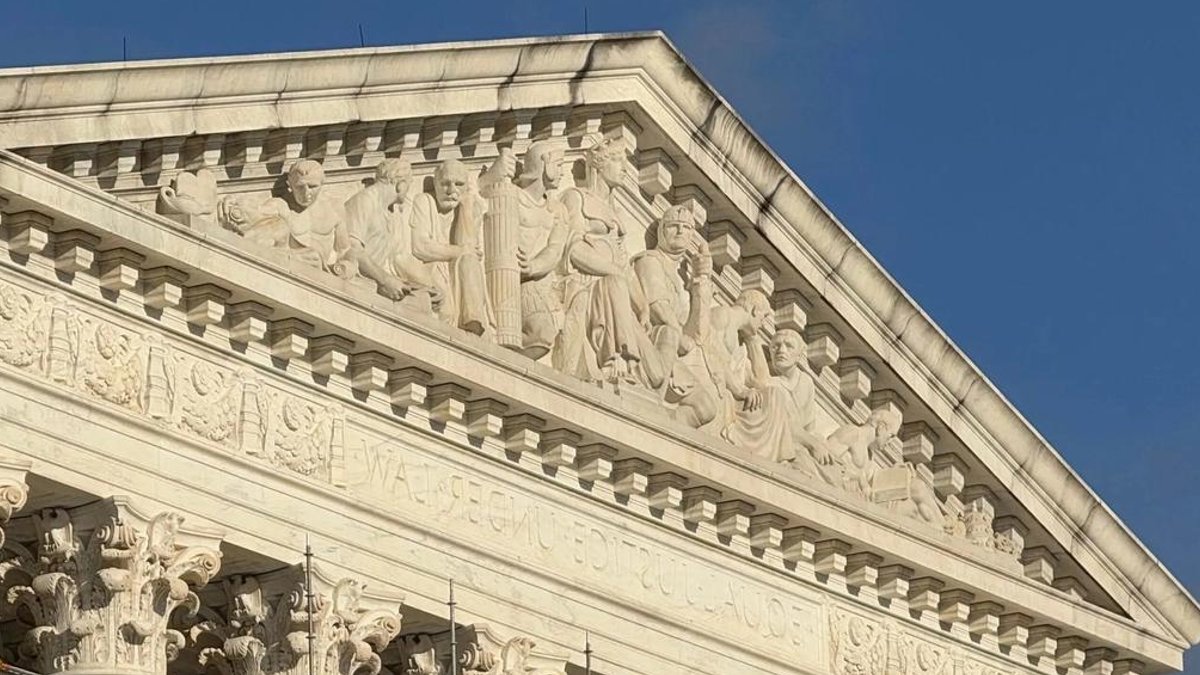
Justice Elena Kagan pushed back this week against the idea that the Supreme Court’s conservative majority is simply doing the bidding of President Donald Trump, saying the court gets a “bad rap” on that front. Speaking at the 9th Circuit Judicial Conference in Washington state on Thursday, Kagan rejected claims that the court is aligned with the administration. “I don’t see this as a court that is just like, ‘We’re just going to rubber stamp what the current administration does.’ You know, quite the opposite,” Kagan said, according to reporters on the scene. She added: “I think that that is a bad rap.”
A “non-event” with the president in the room
Kagan pointed to Trump’s high-profile losses before the court in recent months, including in the tariffs case, as evidence that the justices aren’t simply backing the White House. She also addressed what it was like when Trump himself attended oral arguments on birthright citizenship. “It was sort of like … from the court’s point of view, a non-event,” Kagan said. “Honestly, the vibes in the courtroom were the vibes in the courtroom on any other day.”
Related: Kagan Emerges as Stare Decisis Champion
These remarks come as the court continues to handle a number of cases involving Trump administration policies. On Wednesday, a three-judge panel for the U.S. Court of Appeals for the D.C. Circuit temporarily blocked the administration from ending deportation protections for hundreds of thousands of Haitian migrants, at least until Monday. More than 300,000 Haitians were set to lose their temporary protected status following a Supreme Court ruling that allowed the administration to terminate those designations.
Religious liberty guidance and home distilling
The Justice Department released updated guidance on federal religious liberty protections on Thursday. The document expands instructions for executive agencies on protecting religious expression, parental rights, and the autonomy of religious organizations, responding to recent Supreme Court rulings. The guidance reaffirms that the government may not interfere in the internal governance of religious organizations, including employment decisions tied to their religious mission. It also emphasizes parental rights, citing recent decisions recognizing parents’ constitutional authority over their children’s religious upbringing and education.
In another legal development, a new petition for review, Ream v. U.S. Department of the Treasury, is challenging the federal ban on home distilling. The government argues the ban is a valid exercise of Congress’s power to regulate interstate commerce, citing the 2005 case Gonzales v. Raich, which upheld the federal ban on marijuana. The petition asks the Supreme Court to either overrule Raich or clarify that Congress’s commerce power does not extend to regulating local, noncommercial conduct.
Related: Man fires 7 bullets at neighbor’s garage
It is not hard to imagine the court taking a skeptical look at that argument, given the current conservative majority’s general wariness of broad federal power. But whether they will actually take the case remains an open question.
Tariffs, excessive fines, and a plane seized over beer
The Trump administration is also moving forward with a fresh set of Section 301 tariffs, even after the Supreme Court struck down earlier tariff actions. Scott Lincicome noted that these new duties may be vulnerable to legal challenges, because administration officials made clear they intended to impose them before the required investigations were complete. “The findings were clearly predetermined,” Lincicome wrote.
The editorial board of a major outlet, meanwhile, praised the Supreme Court for agreeing to hear a case about Alaska’s attempt to confiscate a plane owned by a pilot convicted of trying to transport beer to a dry village. The board called it “a chance to ensure the continued sturdiness of a guardrail of liberty,” specifically the Eighth Amendment’s ban on excessive fines.
Related: Orphanage Staff Accused of Child Abuse Scandal
President Trump’s request for the Supreme Court to reconsider its decision to leave in place the 2023 verdict against him in the E. Jean Carroll civil suit was distributed to the justices three days after the court issued its first set of summer orders. That means the court could act on the request when the next set of orders is released on Monday, Aug. 17.
Elsewhere in Supreme Court news, John Greil analyzed the 5,095 questions justices asked during the 58 oral arguments of the 2025-26 term, looking at what the patterns reveal about how the court reaches decisions. In a historical piece, Anastasia Boden profiled Justice James Iredell, a short-lived but influential dissenter who died at 48. Iredell was the youngest justice to die while on the court, and his lone dissent in Chisholm v. Georgia was later enshrined in the 11th Amendment.


Leave a Reply