
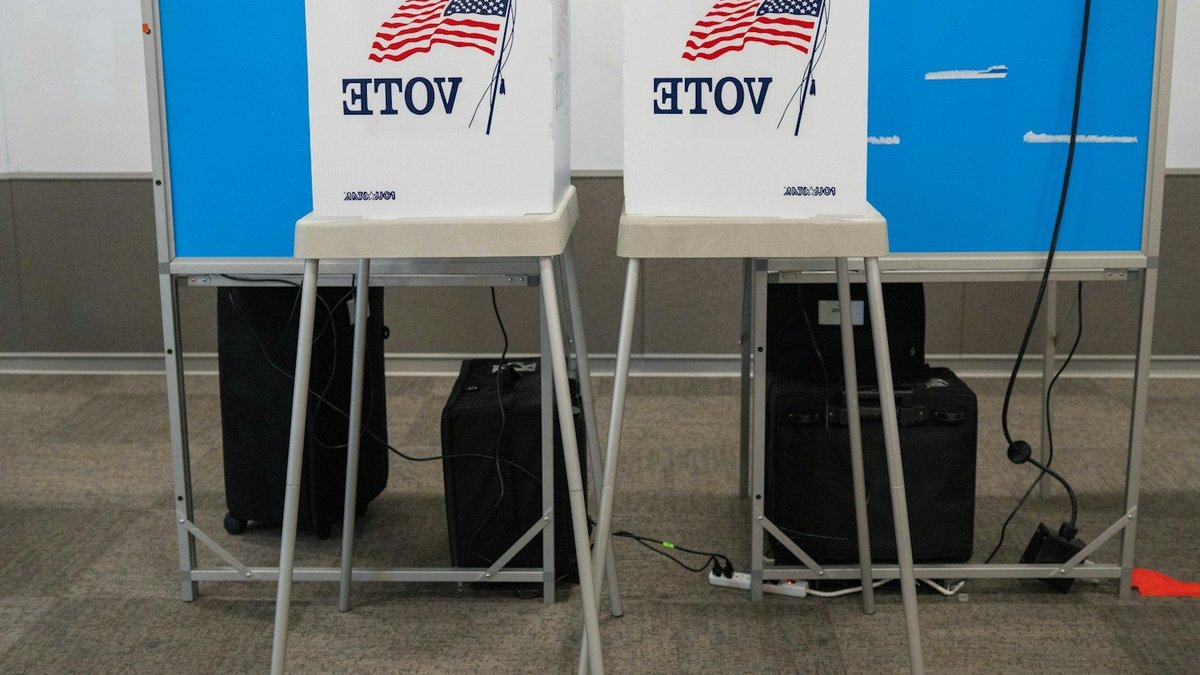
A recent US Supreme Court ruling has revived a Trump-era policy, expanding the use of the federal Systematic Alien Verification for Entitlements (SAVE) database to cross-reference voter registries. This decision has sparked concerns about the erosion of American voting rights, drawing parallels to the Jim Crow era.
The court’s 6-3 ruling allows the executive branch to bypass Congress and mandate inter-agency data sharing, potentially overriding privacy protections established by the Social Security Act and the Privacy Act of 1974. The conservative majority based its decision on a strict interpretation of Section 642 of the 1996 Illegal Immigration Reform and Immigrant Responsibility Act (IIRIRA), codified at 8 USC § 1373.
A Legal Mechanism with Historical Roots
This interpretation ignores the original intent of the 104th Congress, which enacted Section 642 of the IIRIRA to prevent local governments from blocking communication with federal immigration authorities. Notably, Rudy Giuliani, then Mayor of New York City, opposed this provision, arguing it violated the Tenth Amendment and could lead to federal agencies terrorizing people.
The current ruling enables the executive branch to build a centralized voter-verification network without congressional approval, potentially violating the Separation of Powers doctrine under Article I and Article II of the US Constitution.
The administration’s actions coincide with the 2026 midterm elections and escalating geopolitical tensions in the Strait of Hormuz, which have caused global oil prices to spike. Facing these challenges, the executive branch has shifted its focus to domestic issues, signing Executive Order 14399 to create restrictive “State Citizenship Lists.”
This order pairs a promised $5,000 “Trump Dividend” with aggressive technological restrictions, attempting to buy the alignment of the majority while disenfranchising minority voters. The strategy divides citizens into two classes: native-born Americans, who receive automatic assumption of belonging, and naturalized citizens, who face constant suspicion.
A Modern-Day Literacy Test
This dual-class system violates the Equal Protection Clause of the Fourteenth Amendment and the principle established in the 1886 Yick Wo v. Hopkins case, which ruled that laws enforced with an “unequal hand” against a specific group are unconstitutional.
The SAVE database disproportionately affects naturalized citizens, subjecting them to voting restrictions while native-born Americans face no such scrutiny. This system also impacts vulnerable populations, including the elderly, who may lack up-to-date identification documents.
A similar strategy has been observed in India, where the Election Commission deployed a Special Intensive Revision (SIR) process, driven by “Logical Discrepancy” software flags, to target minority and migrant voters. This algorithmic purge serves to engineer a predictable electorate, a strategy the US administration appears to be emulating.
The US executive branch has adopted this approach, mandating automated inter-agency sweeps that profile and lock naturalized citizens into unverified statuses. Administrative errors can jeopardize voter registrations, especially in key battleground states.
Related Post: Ontario Court of Appeal Modernizes Leave Test
The constitutional right to privacy, established in Griswold v. Connecticut (1965), is threatened by automated surveillance grids that profile voters. International law, under Article 17 of the International Covenant on Civil and Political Rights (ICCPR), offers stronger privacy protections as a fundamental human right.
The US Supreme Court‘s ruling in Department of Homeland Security v. League of Women Voters upholds this system, despite dissenting opinions highlighting the harm of disenfranchising lawful voters. Flawed federal immigration archives and the absence of a centralized registry for native-born citizens exacerbate the system’s failures.
When domestic checks fail, a global perspective becomes essential. The legacy of peaceful dissent, championed by figures like Eleanor Roosevelt, John Locke, Mahatma Gandhi, and Martin Luther King Jr., plays a vital role in protecting voting rights.
The Global Impact of Voter Suppression
These protests, organized by the Cockroach Janta Party (CJP) and allied student groups, demand the resignation of India’s Chief Election Commissioner, Gyanesh Kumar, following the implementation of the Special Intensive Revision (SIR) process.
Corporate Overreach and Privacy Concerns
The constitutional right to privacy, established in Griswold v.
The SAVE system’s failure to accurately verify voter eligibility, combined with the lack of a centralized registry for native-born citizens, results in minor administrative errors triggering unverified status codes.
This system disproportionately affects naturalized citizens and vulnerable groups, forcing them to prove their eligibility to vote.
The Impact on Vulnerable Populations and Historical Parallels
Naturalized citizens and vulnerable groups face heightened scrutiny under the automated database regime. Elderly individuals, particularly those with cognitive decline or without current identification, struggle to meet sudden documentation demands. African American and Latino communities, historically disadvantaged in accessing official records, are disproportionately affected. These measures mirror past literacy tests, shifting the burden of proof onto marginalized voters.
The administration’s actions draw parallels to India’s Special Intensive Revision (SIR) process, which uses algorithms to flag and exclude minority voters. Similarly, the U.S. system profiles naturalized citizens and minorities, risking their registrations through minor administrative errors. This approach targets battleground states, potentially contracting the electorate in high-stakes elections.


Leave a Reply