
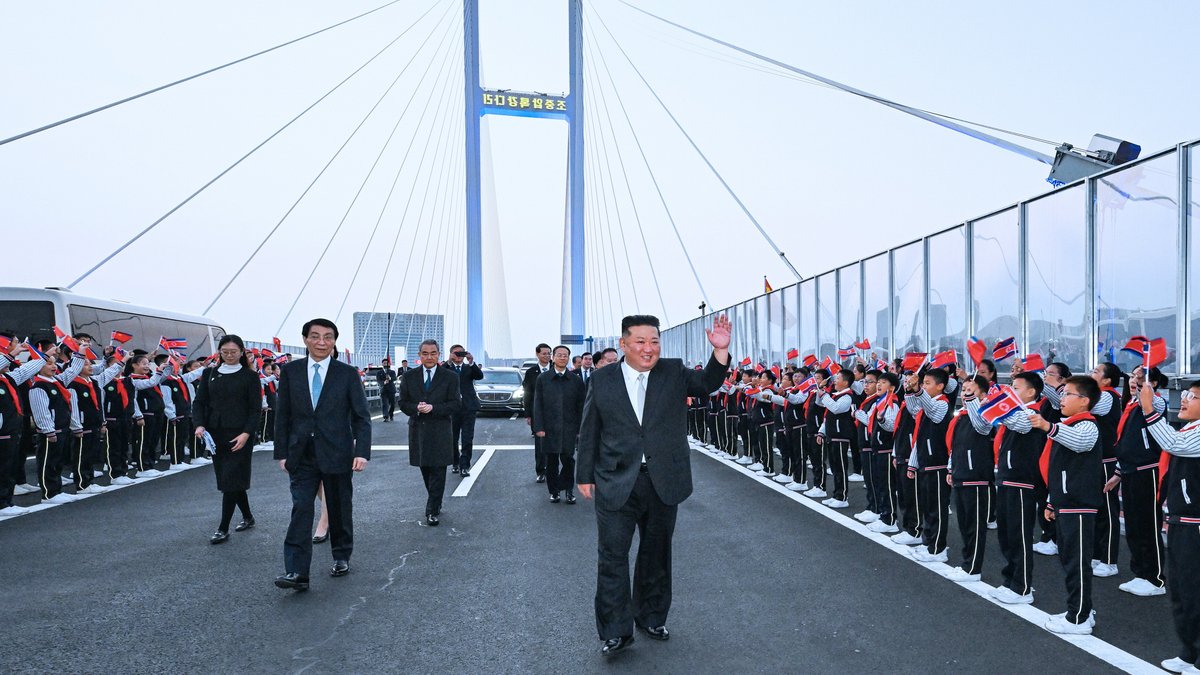
The opening of a new bridge between China and North Korea on October 15, 2026 concluded over a decade of postponements, reinforcing the bond between the two nations. The New Yalu River Bridge, a four-lane, 3-kilometer span, links Dandong in China’s northeastern region to Sinuiju in North Korea, replacing an outdated structure responsible for more than 70% of official bilateral commerce. Both governments marked the occasion with a ribbon-cutting event, where trucks displaying Chinese and North Korean flags were positioned on the bridge itself.
Chinese Premier Li Qiang described the project as a “would become a new landmark symbolizing the two nations’ traditional friendship” and pushed for expanded collaboration in border regions. His North Korean counterpart, Pak Thae Song, framed the bridge as a step toward shared economic advancement. The ceremony showed the political weight of the infrastructure, arriving after years of uncertainty.
Planning for the bridge began in 2014, but construction halted when North Korea failed to complete its portion of the work. Residents of Dandong expressed frustration over the prolonged delay, with some blaming Pyongyang’s hesitation to strengthen economic ties with Beijing amid United Nations sanctions tied to its nuclear activities. Others pointed to disagreements over the bridge’s exact location as a contributing factor to the pause.
Read Also: US cracks down on organ donation groups
Yet the project also introduces concerns about oversight. Leif-Eric Easley, a professor at Ewha University, noted that while the bridge may streamline legal trade, its customs controls could still fall short of preventing informal smuggling—historically a more significant issue than sanctioned goods movement.
This development follows the recent inauguration of a Russia-North Korea road bridge, part of Pyongyang’s strategy to broaden its diplomatic and economic partnerships. Despite China’s dominant role as North Korea’s top trading partner, handling 98% of its external commerce in 2025, recent military and trade engagements with Moscow have tested Beijing’s standing. The bridge’s completion may reflect China’s effort to counterbalance these shifts by reaffirming its economic dominance in the region.
The China-North Korea border stretches over 1,400 kilometers, featuring at least 17 documented road and rail crossings, according to South Korean records. The new bridge’s performance will be closely watched, particularly if trade patterns shift or disruptions occur. Its long-term success hinges on seamless integration with existing border infrastructure, though skepticism remains about whether the project will fully address historical trade bottlenecks or simply create new ones.


Leave a Reply