
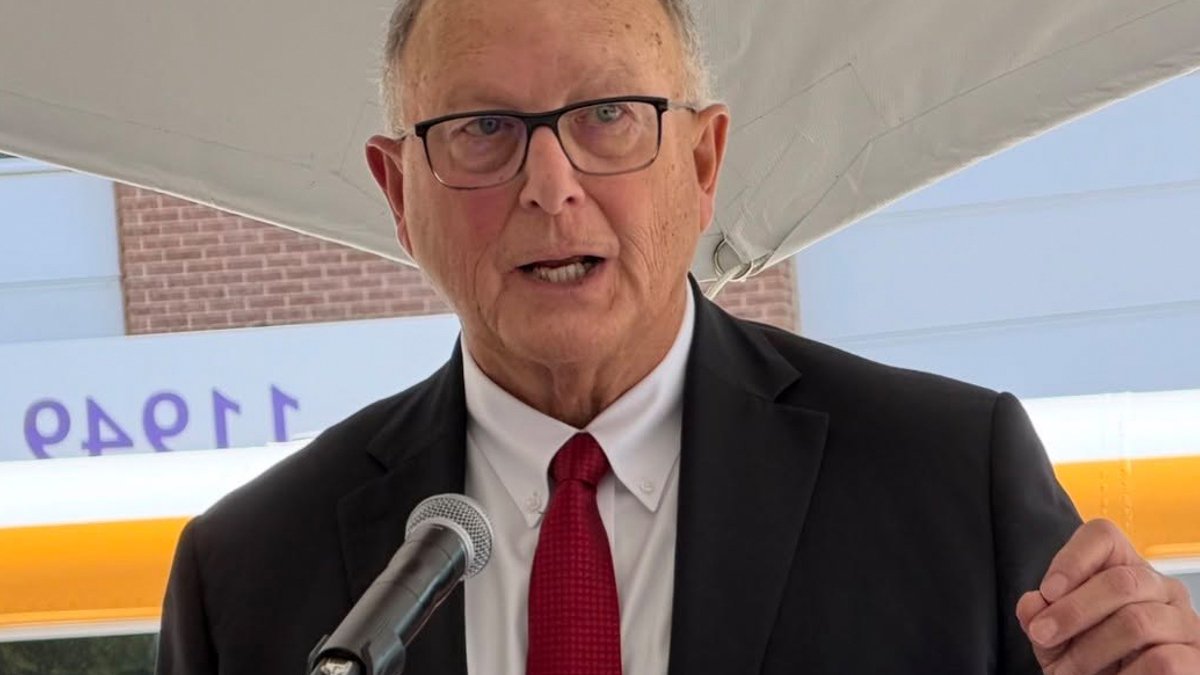
Don Kleine, seeking his sixth term as Douglas County Attorney, credits the work of local law enforcement for Omaha’s low crime rate. With 10 homicides in 2026, Douglas County is on track for its lowest rate in decades, a significant drop from the 50 murders reported in Omaha a decade ago.
Kleine, a Republican, faces Democratic challenger Makayla Danner in the November 3 general election. He believes his experience and steady hand have contributed to the decline in crime, citing the development of relationships between local law enforcement agencies as a key factor.
Experience and Leadership
Kleine has served as County Attorney since 2006 and has expanded the Douglas County Attorney’s Office, growing from about 40 attorneys to over 60 in various divisions, including criminal and civil. He also serves as coroner and mental health board member, overseeing problem-solving courts such as drug court, veterans treatment court, and young adult court.
These courts have helped keep approximately 350 people out of prison by addressing addiction problems and providing support. Kleine’s experience in the juvenile justice division, which has grown from three attorneys to 16, has also been instrumental in changing the lives of young people with the help of their families.
The judicial justice system has expanded over the past 20 years, with the number of Douglas County district judges increasing from 10 to 20. Judges now handle a broader range of cases, known as a ‘country docket,’ where each judge takes a little bit of everything, rather than specializing in specific areas like criminal cases, civil docket, and domestic relations.
Notable Cases and Challenges
Kleine has prosecuted cases in the courtroom, taking on more notable ones, such as the Nikko Jenkins and the Anthony Garcia murder trials. “The Garcia case was so unique because he came here in 2008 and murdered little Tommy Hunter and Shirlee Sherman, and he came back five years later and killed a doctor and his wife, and that’s how we ended up getting him,” Kleine has also worked on the Christopher Edwards case, which involved the murder of a University of Nebraska-Omaha student, Jessica O’Grady, in 2006.
Read Also: China-North Korea bridge finally opens after delays
Despite winning a conviction, Kleine remains bothered by the fact that O’Grady’s body was never found, leaving no closure for the family. The case relied heavily on forensic evidence, highlighting the importance of such evidence in modern criminal investigations. The criminal justice system has seen major changes through the use of DNA and video, with each case now involving a vast amount of video evidence that has to be reviewed by prosecutors and investigators.
Kleine said he’s concerned about the influence of artificial intelligence when it comes to evidence. “The next shoe to drop, as you would say, you wonder if there’s going to be a lot of worries about fake videos or AI images that may get made.” However, he also expresses concern about the potential influence of artificial intelligence on evidence, particularly the possibility of fake videos or AI-generated images.
While elected as a Democrat in 2006, Kleine switched his political party affiliation to Republican in 2020, following a controversy over his handling of the deadly shooting of an African American participating in an Old Market protest that summer, following the death of George Floyd by a Minneapolis police officer. Despite the backlash, Kleine said politics can’t play a role in decisions. “I don’t think this is a job where you limit somebody’s ability to run for this office, because it’s about doing a job. There’s not really politics, and shouldn’t be involved here.”
The case has had a lasting impact on Kleine’s perspective on the role of politics in the criminal justice system, and he continues to emphasize the importance of impartial decision-making in the county attorney’s office. As he seeks re-election, Kleine’s experience and approach to the job will likely be subject to scrutiny, particularly in light of the ongoing debate about the role of politics in the criminal justice system.
With 16 attorneys in the division, Kleine has seen it grow from three attorneys when he was a Deputy Attorney in 1978. The division handles several thousand cases, and Kleine believes that helping young people with addiction problems is essential to keeping them out of prison.
Kleine’s handling of the James Scurlock shooting case in 2020 led to public controversy and a party switch from Democrat to Republican.


Leave a Reply