
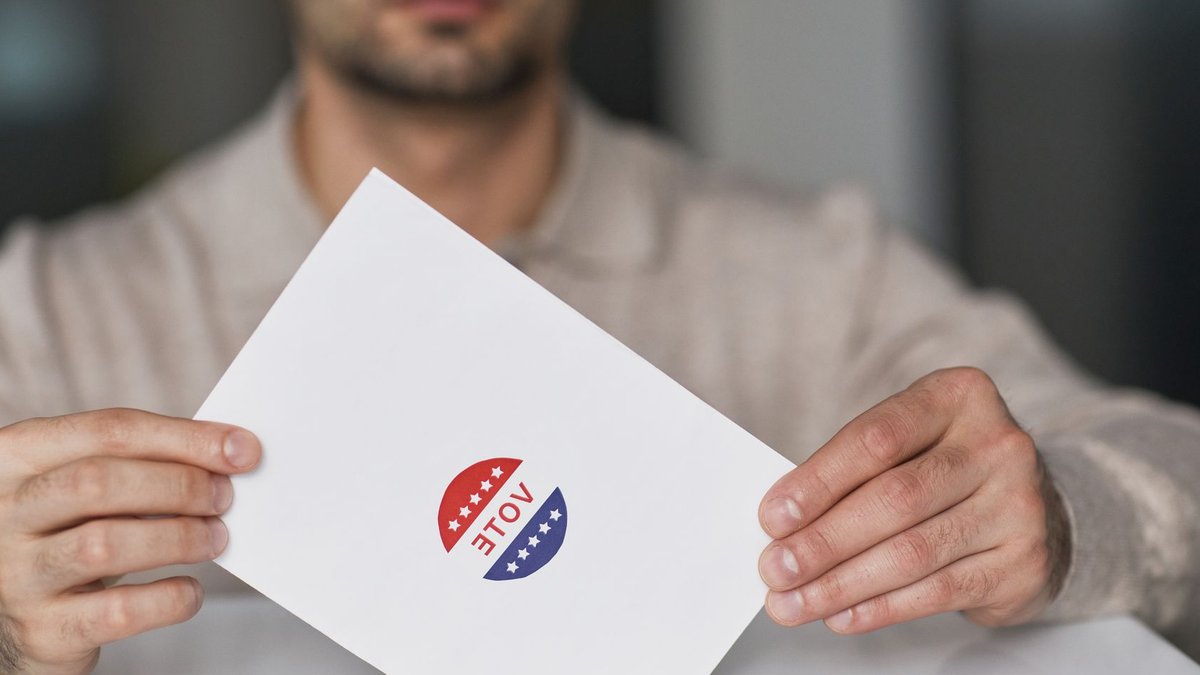
For most of the 21st century, some of Nebraska’s smallest counties have conducted elections entirely by mail, following bipartisan action to expand voting access. This effort has saved taxpayer money and made it easier for residents in the state’s most isolated rural areas to vote.
Nebraska’s Republican nominee for secretary of state, Scott Petersen, proposes changes to this system, now essential in some of the state’s most Republican counties. Petersen advocates for establishing in-person voting in those counties instead of automatically mailing ballots to all registered voters.
Petersen argues that extended mail voting allows outside groups to collect ballots and influence elections. He believes technology could make polling places accessible to rural voters without requiring counties to conduct elections only by mail.
Mail Voting in Rural Nebraska
Morrill County in the Nebraska Panhandle is one of 11 counties that conduct elections entirely by mail. The county’s election commissioner, Candace Panas, said all-mail voting saves the county the costs of setting up polling places and hiring poll workers.
“I don’t have the money in my budget to turn around and get all my polls in order and all the equipment and things I would have to get to do that,” Panas said. “There’s just no way my budget would allow me to do that.”
Since 2005, Nebraska has allowed counties with fewer than 10,000 residents to hold elections entirely by mail. These 11 counties consistently record higher voter turnout than the state as a whole, averaging about 69% in the 2022 midterm election, compared to 55% statewide.
A 2024 analysis found that ballots cast in these counties increased by an average of 16% between the 2016 and 2020 presidential elections, as most transitioned to all-mail voting. Participation also rose in lower-turnout elections, including the 2022 midterms, even as statewide turnout declined.
History of Mail Voting in Nebraska
Mail-in voting has existed in Nebraska since its founding, but historically, voters needed a reason to vote in absentia. In 1999, the Nebraska Legislature opened mail-in voting to all voters, becoming a no-excuse state allowing any registered voter to request an early-voting ballot without justification.
This bipartisan effort was introduced by a Democratic state lawmaker and supported by the Republican Nebraska secretary of state. Then-Gov. Mike Johanns, a Republican, signed it into law, and it has been credited with increasing voter participation.
In 2005, Republican state Sen. Deb Fischer sponsored legislation allowing Nebraska’s smallest counties to conduct elections by mail, partly to avoid the expense of equipping remote polling places with accessible voting machines required under federal law.
The shift to all-mail voting was gradual. Some counties first mailed ballots to voters in select precincts before expanding countywide. In Stanton County, inaccessible polling locations and a tornado that destroyed much of Pilger accelerated the transition.
Related Post: Supreme Court Ruling Revives Trump-Era Voter Database Expansion
Longtime election official Dave Shively, who headed Lancaster County elections from 1999 to 2023, said the move to all-mail voting has been positive. Many voters are elderly or live far from polling places, making in-person voting difficult.
Shively noted, “We probably have a larger number today of people that are what we call 100% voters — people that never miss an election — because, you know, they get that ballot in the mail and always send it in.”
Recent flooding washed out rural roads, and some remain impassable due to massive wildfires last year.
Security Measures in Nebraska’s Mail Voting System
Nebraska’s mail voting system includes several security measures to ensure election integrity. Voters must provide a photo ID to receive a mailed ballot. Each returned ballot requires a signature on the outside envelope, matched to the voter’s registration records.
Recent Changes and Ongoing Debates
These changes followed voter approval of a photo ID requirement in 2022.
Proposals to limit early and mail voting have been introduced but not advanced. Incumbent Secretary of State Bob Evnen defends the system, stating Nebraska works hard to ensure honest mail-in voting.
Outside the 11 all-mail counties, Nebraska voters must request mail ballots. These can be returned by mail, in person, or via official drop boxes. The state’s mail voting system has increased voter participation, particularly in rural areas.
The state’s efforts to balance accessibility and security in mail voting remain a topic of debate among officials and lawmakers.
Challenges and Criticisms of Mail Voting
The issue became a partisan flashpoint in 2020 after former President Trump alleged, without evidence, that voter fraud cost him re-election. Trump has since questioned mail ballot security, though he has voted by mail himself and encouraged Republican voters to do the same. In March, he issued an executive order to restrict mail voting by limiting ballot delivery to voters on federal lists, which courts have blocked for the 2022 midterms.
Nebraska Republicans have also sought to limit mail voting, proposing measures such as requiring voters to provide a valid reason and reducing the early voting period from 35 to 22 days. These efforts reflect ongoing tensions between expanding access and addressing concerns over election integrity.


Leave a Reply