
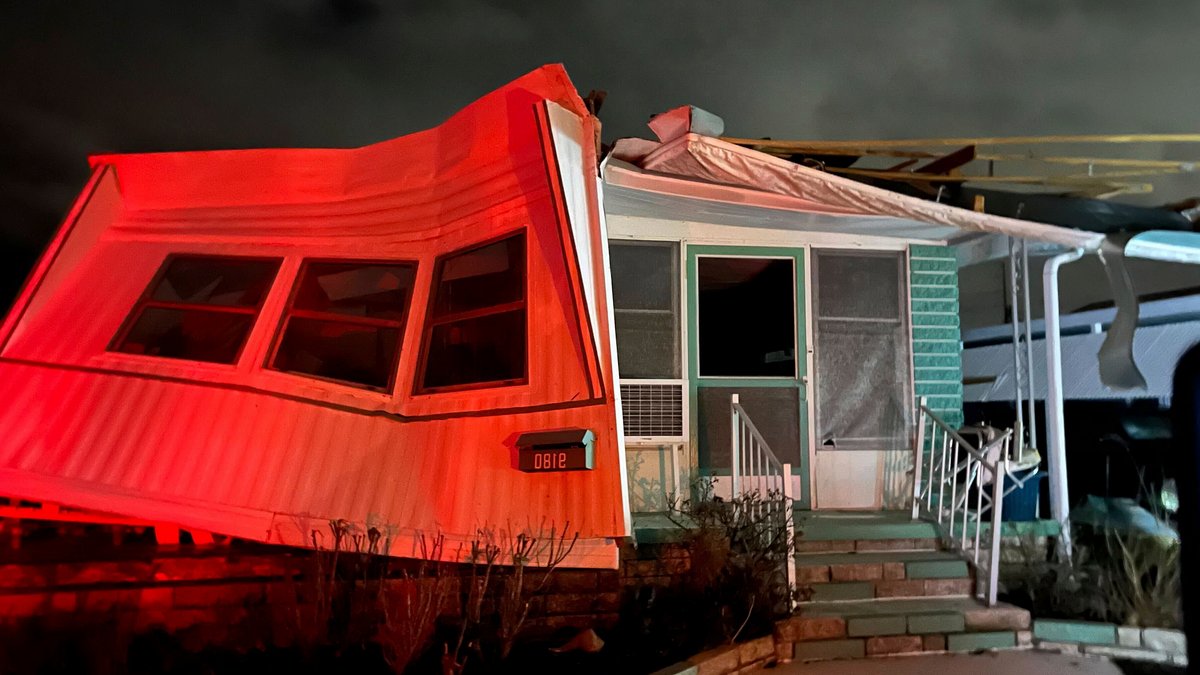
Researchers at Florida International University’s Wall of Wind test facility conducted an experiment to measure the effects of hurricane-force winds on manufactured homes. The test involved a single-wide manufactured home being subjected to winds of 110 miles per hour, resulting in the screws shearing off and the unit tumbling backward.
The experiment was part of a larger effort to improve the safety of manufactured homes, which are a common type of affordable housing in the US. Over 22 million people live in manufactured homes, which are regulated by a federal building code that has not been updated since 1988.
Identifying Weaknesses and Solutions
The federal code lacks guidance for building manufactured homes to withstand earthquakes, wildfires, and tornadoes, and has created differences in construction costs and performance between manufactured and site-built housing. Researchers have been working to find ways to enhance the performance of manufactured homes without compromising affordability.
Read Also: U.S. Approves Nebraska’s Expanded TANF Restrictions
Through laboratory experiments, post-disaster field investigations, and community engagement, researchers have identified failures in how manufactured homes are anchored to the ground and how the roof connects to the walls. They have also been testing new designs using thicker straps, screws, and different hardware to enhance strength.
Changing the federal building code requires more than laboratory work, so researchers have also been working with residents, manufacturers, installers, and government agencies to learn from their perspectives and update installation practices. In spring 2026, they tested three manufactured homes provided by the Federal Emergency Management Agency, examining seven installation systems commonly used in regions prone to hurricanes, floods, or earthquakes.
The tests collected high-speed video imagery and tracked the movement of the manufactured home and stresses on its materials over time. The results revealed that installation practices allowed by some states do not meet federal code minimum requirements, and that many commonly used installation systems in the US do not meet modern wind engineering standards.
However, the most robust installation systems performed effectively, and manufactured home residents can talk to their installers about meeting Wind Zone III requirements, which may exceed the legal minimum requirement for where the home is going. Researchers also designed a wind load reduction device that attaches to the gutter system along the roof line, reducing wind pressures on the roof and helping the roof shingles remain attached and intact under harsh wind conditions.
Read Also: Singapore and India legal groups sign trade MoU
One researcher who worked on the project noted that the results demonstrate that manufactured homes can be designed and built to be both affordable and resilient to high winds. In fact, some already are; it just isn’t the norm. The mobile homes they tested were built specifically for FEMA at three times the strength required by the federal building code, and when installed with a robust anchoring system, they performed well even at high wind speeds.
Implications for Affordable Housing
The researchers’ experiment at the Wall of Wind test facility was a key part of their research, and it provided valuable insights into the behavior of manufactured homes in high-wind conditions. The test results showed that the homes can be designed and built to withstand high winds, but that the installation practices and anchoring systems used are critical to their performance. With this knowledge, the researchers are working to develop new guidelines and standards for the construction and installation of manufactured homes.
The Wall of Wind test facility is a unique resource that allows researchers to test the performance of buildings and other structures in high-wind conditions.


Leave a Reply