
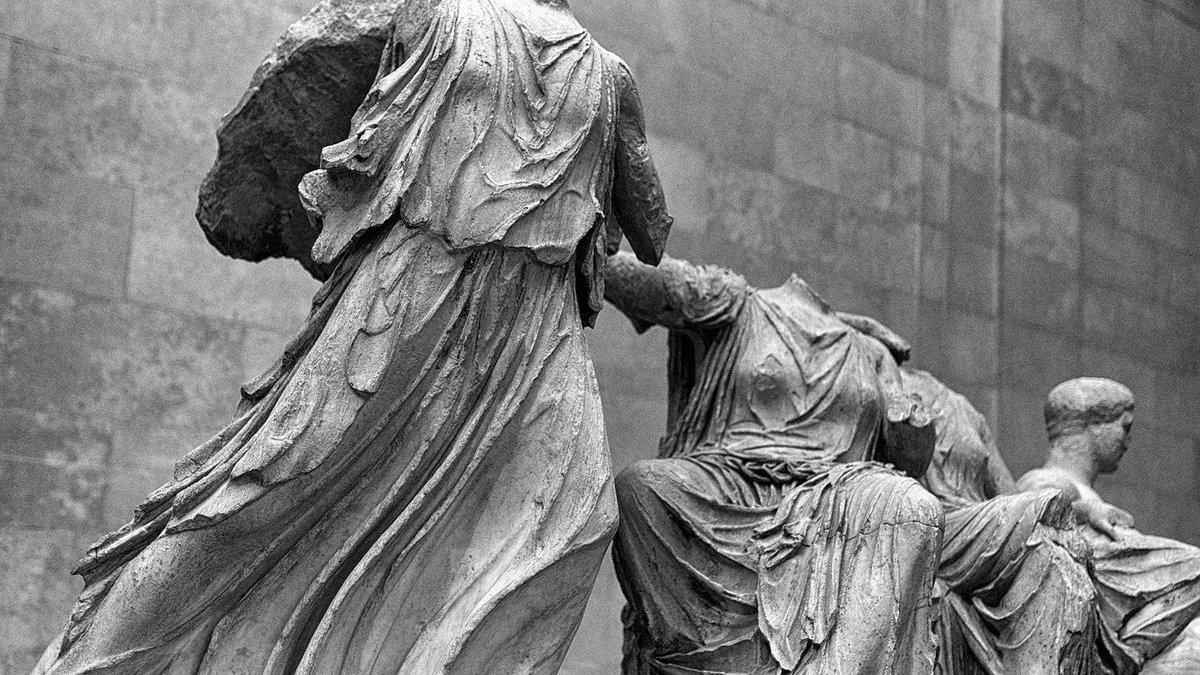
In a shadowy chamber, a solitary figure stands—a leader whose grip on power has begun to falter. Beyond the walls, voices echo and windows shatter. Bullets pierce his form, stripping away layers of flesh. The scene evolves beyond mere destruction: his scattered body parts regenerate into distinct entities. These new forms assault the original figure, devouring him until nothing remains. The depiction illustrates a political entity not merely being eliminated, but fractured, multiplied, and reshaped by the very populace it once governed.
When a Regime Generates Its Own Enemies
The challenge emerges from how this transformation contests conventional notions of revolution. These destroyers are not external adversaries but arise from within, becoming self-sufficient and then opposing their origin. The issue transcends the moment a leader falls—it probes what occurs when a political entity can no longer sustain the embodied forms it cultivated. A regime may generate physical manifestations it cannot subsequently regulate.
This question continues the movement of the previous essays without requiring their concepts to be rebuilt. The first essay approached the body as something whose capacities emerge through encounters, pressures, relations, histories, institutions, and material conditions. The second followed that movement beyond biological presence, asking how embodied existence can remain operative after the living body is gone, through memory, law, testimony, material arrangements, technology, and other forms of sedimentation. The problem now changes. If a body is formed within the conditions it encounters, and if what it does can become part of the conditions encountered by bodies that come later, what happens when a political body claims the authority to diagnose those conditions and to intervene in them?
The difficulty first appears at the level of understanding. Hans-Georg Gadamer’s account of hermeneutical experience is useful here because it refuses the fantasy of an interpreter who begins from nowhere. Understanding comes with history, language, expectation, and inherited distinctions. Prejudice, in Gadamer’s sense, is not simply an error that can be removed before genuine understanding begins. Even the suspicion that prejudice is an obstacle belongs to a prior understanding of what prejudice is. Experience (Erfahrung) matters because an encounter can resist the expectations through which it was initially approached and thereby alter the understanding from which the encounter began. Understanding is open because what it encounters can change it.
This is continuous with the embodied understanding developed earlier in the project. A body does not first possess a complete interpretation and then enter the world. It understands from somewhere, through a body already shaped by previous encounters and still exposed to further ones. Language is part of this movement, but understanding cannot be reduced to language. What a body encounters can change not only what it says but what it is capable of noticing, enduring, expecting, and doing. The body is therefore not merely the object of understanding. It is one of the conditions through which understanding occurs.
Read Also: Delhi police tighten security before voter-list protests
Political Diagnosis and the Power to Classify
Political diagnosis introduces something that Gadamer’s account alone does not settle. Interpretation changes character when it acquires authority over the body it interprets. A misunderstanding between individuals can be consequential, but a political institution can transform its interpretation into a classification and its classification into an intervention. A body may be designated dangerous, deviant, criminal, foreign, incapable, threatening, protected, or in need of correction. Once such a judgment acquires institutional or legal force, it can alter the possibilities available to that body: its movement, recognition, exposure to coercion, access to protection, vulnerability to punishment, and capacity to appear before an institution as a claimant, witness, or responsible subject.
The issue, then, is no longer only that understanding is situated and revisable. Some situated understandings possess the authority to organize the field in which later experience occurs. Political understanding can become intervention, and intervention can become part of the history that later understanding must interpret. The diagnostician does not simply describe a condition already there. Through the authority of diagnosis, he may participate in producing the condition he will later encounter.
Al-Fārābī on Medicine and Political Rule
This is where al-Fārābī becomes indispensable, but also where historical precision matters most. The text I draw upon is Fuṣūl Muntazaʿa (Selected Aphorisms), and what matters here is not the claim that al-Fārābī somehow anticipated the contemporary argument developed in this essay. He did not formulate a theory of embodied political diagnosis, legal sedimentation, or the self-referentiality of political treatment in the terms used here.
What his text gives us is something more exact and, for that reason, more valuable: an account of political rule through the analogy of medicine, together with a conception of political health, disorder, treatment, and the ordering of human capacities. The contemporary argument begins by reconstructing what becomes possible when this architecture is placed in relation to the problem of an embodied political agent. In the fifth chapter, al-Fārābī writes:
The art of politics is like the art of medicine, because just as the physician needs to know the bodies and their parts, the conditions that occur in them, and the diseases that occur in them, and the causes of those diseases, and the degree of each disease, and the treatment by which ea


Leave a Reply