
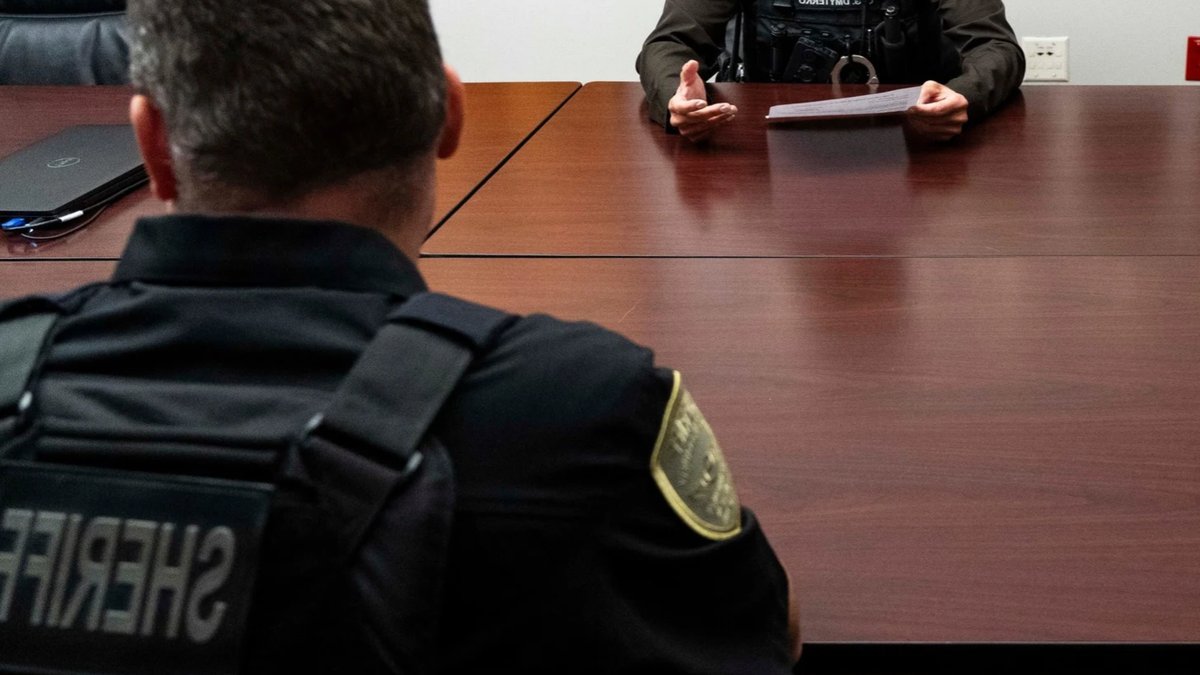
Records obtained by the Flatwater Free Press show that school resource officers (SROs) in Omaha-area schools have used force on students at least 63 times since the start of 2021. The incidents include tackling, striking, grabbing, handcuffing, and the use of pepper spray. Children as young as 11 have been restrained, and Black students, who represent roughly 15% of the district’s enrollment, account for the majority of those encounters.
Force incidents rise in Omaha schools
The Omaha Police Department (OPD) places SROs in 34 schools serving more than 39,000 students. Between 2021 and 2025, OPD officers recorded 33 force incidents across 14 campuses. In the same period, the Douglas County Sheriff’s Office deployed officers to 10 schools with about 8,600 students and logged 30 uses of force.
OPD data show that officers also made over 1,000 arrests on school property during the five-year span. The sheriff’s office reported that one deputy used a Taser and muscling techniques in separate incidents, including a knee on a 16-year-old Black girl during a fight breakup.
Physical tactics ranged from takedowns to joint locks and pressure points.
Police response and community reaction
OPD spokesperson Neal Bonacci compared the school-force rate to “less than a percent” of the department’s overall contacts, suggesting the frequency mirrors typical patrol interactions. He emphasized that SROs receive the same use-of-force training as other officers and are expected to employ the minimum force necessary.
A policy strategist for the ACLU of Nebraska, Jason Witmer, warned that permanent police placement threatens civil liberties and may funnel vulnerable youths into the criminal justice system.
Parents have voiced alarm over the deployment of electric shock gloves. After community outcry at an Omaha school board meeting, OPS officials asked OPD officers to stop carrying the devices in OPS schools, a request the department honored. However, SROs in the Elkhorn, Millard, and Westside districts continue to be equipped with the gloves.
For families, the reality of an officer on campus can feel both protective and invasive. When a deputy intervened in a fight at a middle school, the student’s parents were notified only after the officer had already restrained their child, leaving them uncertain about the exact circumstances.
School administrators say they refer serious incidents—such as arson, firearms, drug distribution, or sexual assault—to SROs, while routine behavior problems are handled by educators. In Bellevue, officers may be called for a range of offenses from bullying to traffic violations, and the district assures that students retain their legal rights when questioned by police.
Training and operational scope
According to historical records, Nebraska first placed resource officers in schools when Lincoln Public Schools partnered with the Lincoln Police Department in 1971. State legislation enacted in 2019 later defined the position as separate from school disciplinarians, yet experts note that detailed guidelines for officer involvement remain limited.
Officials from the Omaha Police Department and the Douglas County Sheriff’s Office describe SROs as sworn officers who operate under contracts with school districts while remaining accountable to their law-enforcement agencies. Capt. Steve Meister explained that the role has shifted from focusing solely on external threats to a community-based model that includes classroom assistance, lockdown-drill support, threat-assessment collaboration, and referrals to mental-health co-responders.
Incidents involving specialized equipment
Police data show that officers employed chemical agents such as pepper spray or pepperballs on six separate occasions since 2021. Half of those deployments targeted individual students aged 12, 16, and 17, while the remaining instances involved crowd-dispersal at events like football games.
Specific force incidents illustrate the application of specialized tools.
School districts outlined communication procedures for SRO interactions. Omaha Public Schools indicated that teachers first report serious behavior to administrators, who then contact SROs for matters such as arson, firearms, drug distribution, or sexual assault. Bellevue Public Schools noted that parents or guardians are notified promptly unless the officer requests police to handle the notification.


Leave a Reply